
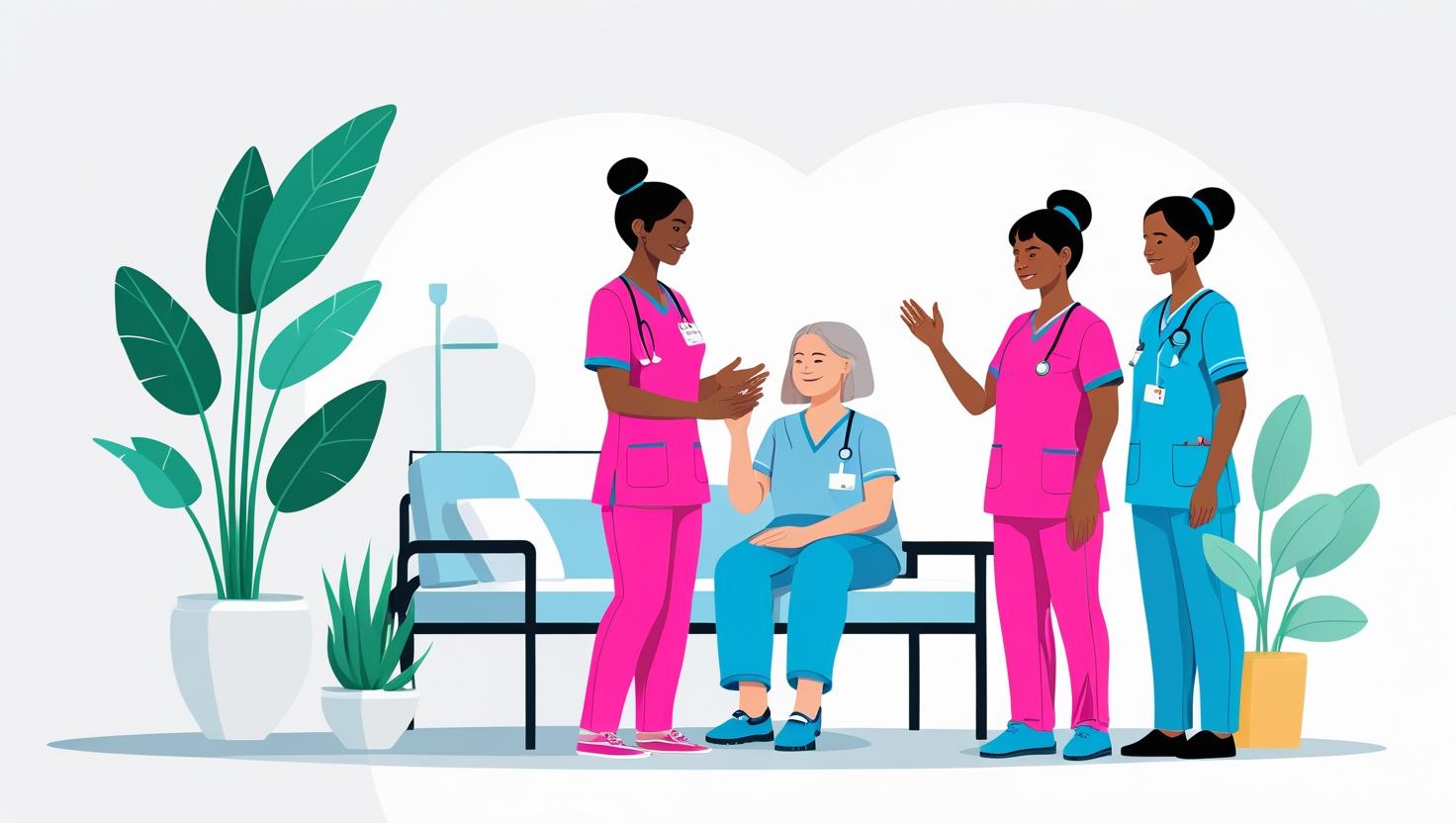
At Nurse Assist 24/7, we believe that every gesture, glance, and moment of silence carries meaning. In the world of care and support work, communication goes far beyond words. It’s in how we show up, how we listen without interrupting, and how we offer presence even when nothing is said.
This month, as part of our Positive Workplace Culture Campaign, we’re focusing on Non-Verbal Communication — the subtle yet powerful ways we shape safety, trust, and respect within our teams and with our participants.
Why Non-Verbal Communication Matters in Our Work
Support work isn’t always scripted. We often walk into emotionally charged or unpredictable situations where what we say is only part of the story. A calm posture, soft eye contact, or a gentle nod can do more to de-escalate a tense moment than a full sentence.
For participants who may be non-verbal, neurodivergent, or navigating trauma, how we communicate through body language can make or break their sense of emotional safety.
And the same goes for our teams. In high-pressure environments, poor non-verbal cues — like crossed arms, eye rolls, or dismissive silence — can damage morale and trigger misunderstanding.
What to Start Paying Attention To
Here are 3 often-overlooked areas that play a big role in our work culture:
1.Facial Expressions
Your face tells a story even before you speak. Try softening your expression in stressful moments or smiling with authenticity.
2.Posture & Space
Standing over someone while speaking? It can feel dominating. Sitting beside them? It signals partnership.
3.Micro-Gestures
A nod. A brief pause to make eye contact. An open palm. These small actions build trust faster than forced positivity ever could.
Creating a safe and respectful workplace doesn’t always begin with words. It starts with presence, with body language that says, “You matter. I see you. You’re safe here.”
That’s what we’re championing this month at Nurse Assist 24/7.
Let’s each take responsibility for the way we communicate — verbally and non-verbally — and make every moment a chance to support, connect, and uplift.
Watch out for our next post as we explore how facial cues, posture, and eye contact silently shape trust in your care relationships.
Let’s keep building a culture where what’s unspoken speaks volumes.